
Programs & Services
Proof of Concept Awards
PROOF OF CONCEPT AWARDS
These awards provide competitive funding for UT faculty members or permanent researchers with a principal investigator (PI) status to accelerate the tech commercialization process.
Discovery to Impact Proof of Concept Awards
- Maximum value of $25,000
- No matching requirement
Discovery to Impact Proof of Concept+ Awards
Requires the applicant to secure $125,000 in matching funds from an industry partner
Maximum value of $125,000
HOW TO APPLY
Applicants from any UT college, school, or unit may apply for one or both awards in any order; however, if a UT researcher wins both a Texas and Texas+ Proof of Concept award for a specific innovation, their total funding is limited to $125,000. In addition, applicants can receive a maximum of two Proof of Concept awards per year.
Email pocawards@austin.utexas.edu with questions.
Application cycles occur during the Fall and Spring semesters.
Key Dates:
Applications Open: Monday, September 7, 2026
Application Deadline: Monday, October 12, 2026
Application Decisions: Friday, December 04, 2026
Award Ceremony: Friday, December 11, 2026
Deadlines are by 5:00 p.m. (Central) on the day indicated
Explore guidelines and view a sample application here.
Frequently Asked Questions
Contact us with any questions regarding the Discovery to Impact Proof of Concept Awards program. If you would like to discuss any specific eligibility questions or details about your potential POC project, please include days and times that would work for a Zoom call in your email correspondence.
Spring 2026 Awardees
READ MORE
Congratulations to Dr. Qian Zhong and team, Robert Williams, Yuling Chen, and Karlie Flader, on receiving a Discovery to Impact Proof of Concept Award for their project, Bedside Breathe-In Diagnostics for Pulmonary Fibrosis.
A faculty member in The University of Texas at Austin, College of Pharmacy, Dr. Zhong and his team are advancing a rapid, noninvasive diagnostic platform that uses inhaled biosensors and a urine test to enable early bedside detection of pulmonary fibrosis.
READ MORE
Congratulations to Dr. Jayant Sirohi on receiving a Discovery to Impact Proof of Concept Award for his project, Precision Aerial Firefighting System.
Dr. Sirohi, a faculty member in the Cockrell School of Engineering, The University of Texas at Austin is advancing a low-cost, precision aerial firefighting technology that uses a guided, autorotative delivery system deployed from fixed-wing drones to accurately place fire suppressants on early-stage wildfires.
READ MORE
Congratulations to Dr. Daniella Rempe on receiving a Discovery to Impact Proof of Concept Award for her project, Doing for Floods What Smoke Alarms Did for Fire.
Dr. Rempe, an associate professor in the Jackson School of Geosciences at The University of Texas at Austin, is advancing a low-cost, fully autonomous flood alarm designed to provide immediate, site-specific warnings when rising water reaches a location.
READ MORE
Congratulations to Dr. Yaguo Wang and Alejandro Saenz on receiving a Discovery to Impact Proof of Concept Award for their project, High-Performance Flexible Electronics.
A faculty member in the Cockrell School of Engineering, The University of Texas at Austin, Dr. Wang is advancing an ambient‑air femtosecond laser sintering process to produce oxidation‑free, high‑conductivity copper films on flexible substrates.
READ MORE
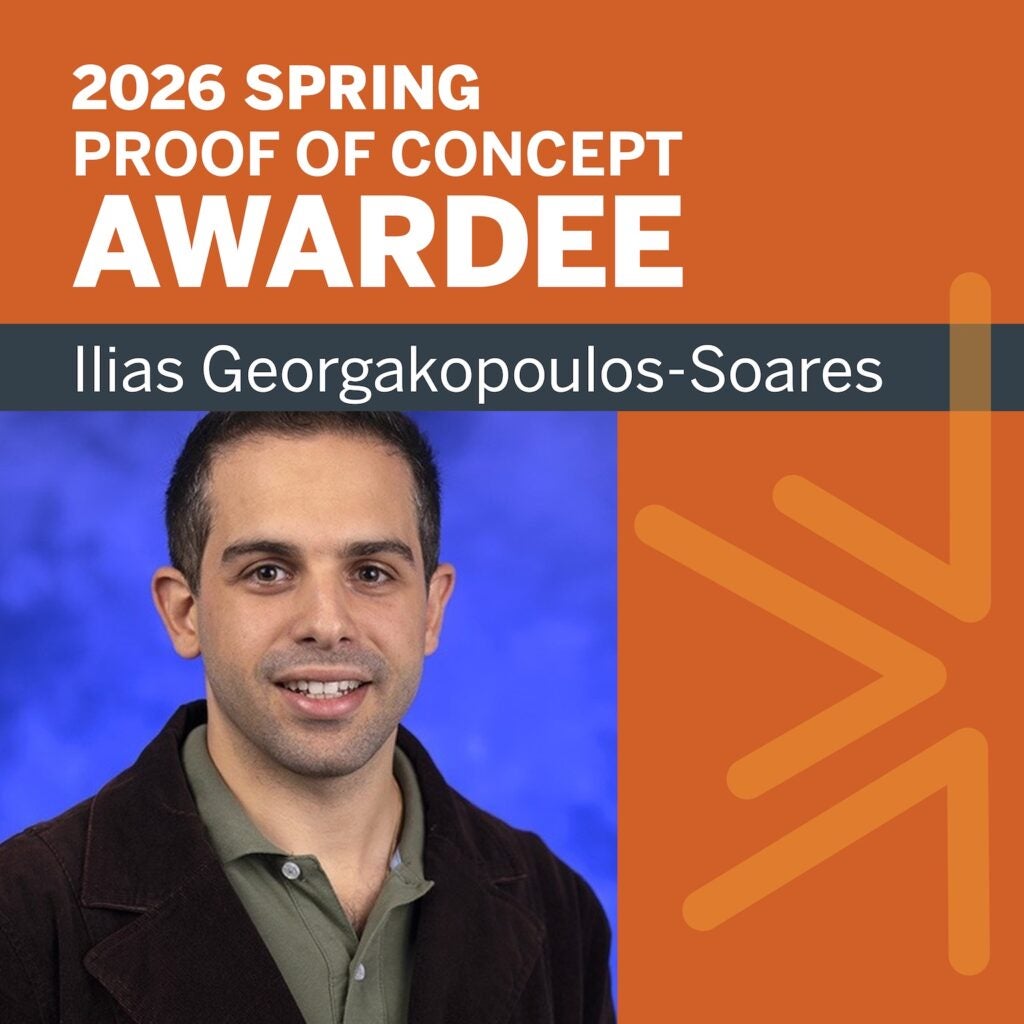
Congratulations to Assistant Professor Dr. Ilias Georgakopoulos-Soares, PhD, and his research teams on receiving two awards recognizing innovative work in privacy-preserving genomic analysis and data compression.
Dr. Georgakopoulos-Soares and team members Kimonas Provatas and Ioannis Mouratidis received a Discovery to Impact Proof of Concept Award for their project, Privacy Preserving Framework for Genomic Analyses. The team is advancing a software-based, privacy-preserving framework that enables secure genomic analysis directly on encrypted data using homomorphic encryption, helping make genomic research more secure and accessible.
Dr. Georgakopoulos-Soares also received an award with team members Michail Patsakis, Aris Karatzikos, and Ioannis Mouratidis for their project, Structure Aware Lossless Compression. The team is developing a structure-aware, lossless data compression platform that automatically learns the underlying structure of datasets to reduce storage and data transfer costs, improving efficiency for large-scale data management and analysis.
READ MORE
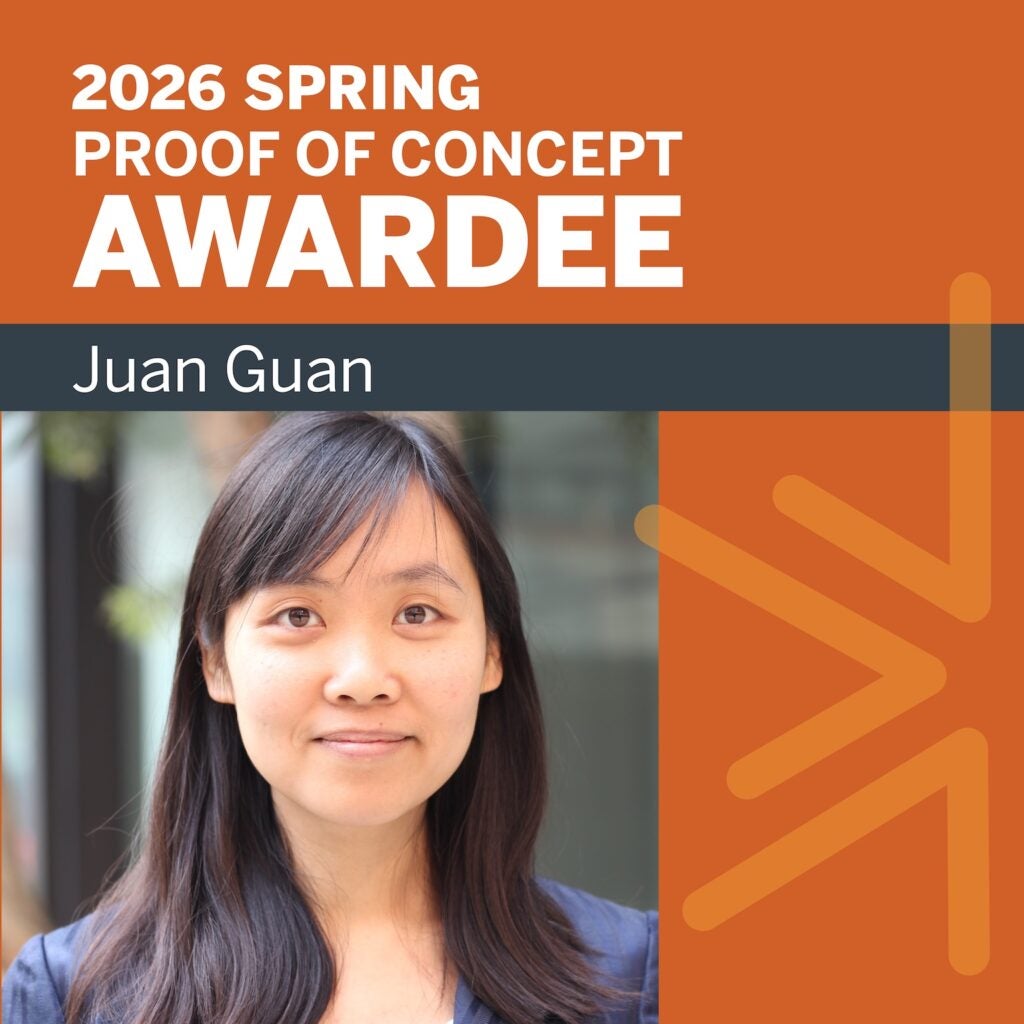
Congratulations to Dr. Juan Guan and Dr. Zhengrong Cui on receiving a Discovery to Impact Proof of Concept Award for their project, A Novel Treatment for TKI-resistant Non-Small Cell Lung Cancer.
Faculty members in the The University of Texas at Austin, College of Pharmacy, Dr. Guan and Dr. Cui are advancing a novel therapeutic strategy for tyrosine kinase inhibitor–resistant non‑small cell lung cancer by using mRNA lipid nanoparticles to deliver peptides that disrupt oncogenic biomolecular condensates.
READ MORE
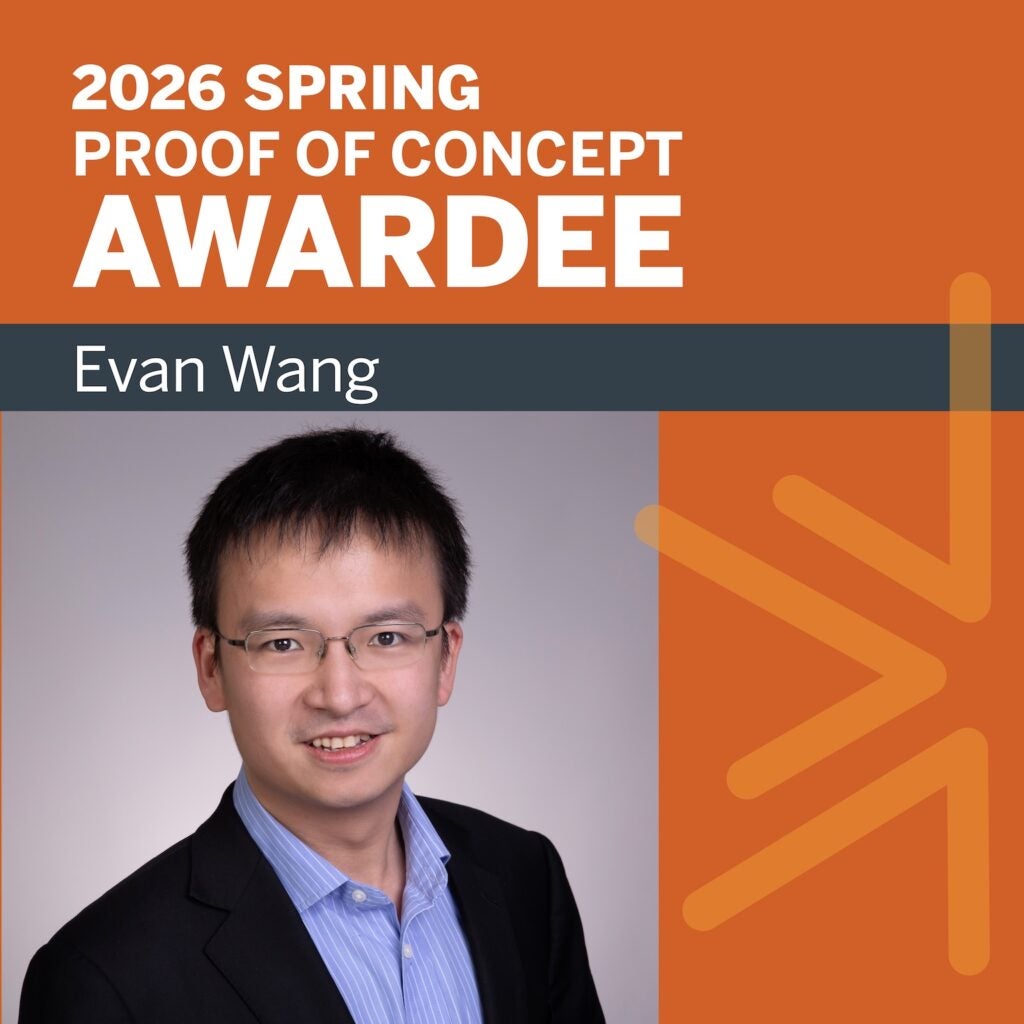
Congratulations to Dr. Huiliang (Evan) Wang and Mohammad Bashashati, M.D. on receiving a Discovery to Impact Proof of Concept Award and Cockrell Innovation Grant for their project, Wearable Ultrasound Neuromodulation System for Gastric Motility Disorders.
Dr. Wang, a faculty member in the Cockrell School of Engineering, The University of Texas at Austin, and Dr. Bashashati, a faculty member in Dell Medical School at the University of Texas at Austin, are advancing a wearable ultrasound neuromodulation system for noninvasive, at-home treatment of gastroparesis and functional dyspepsia.
READ MORE
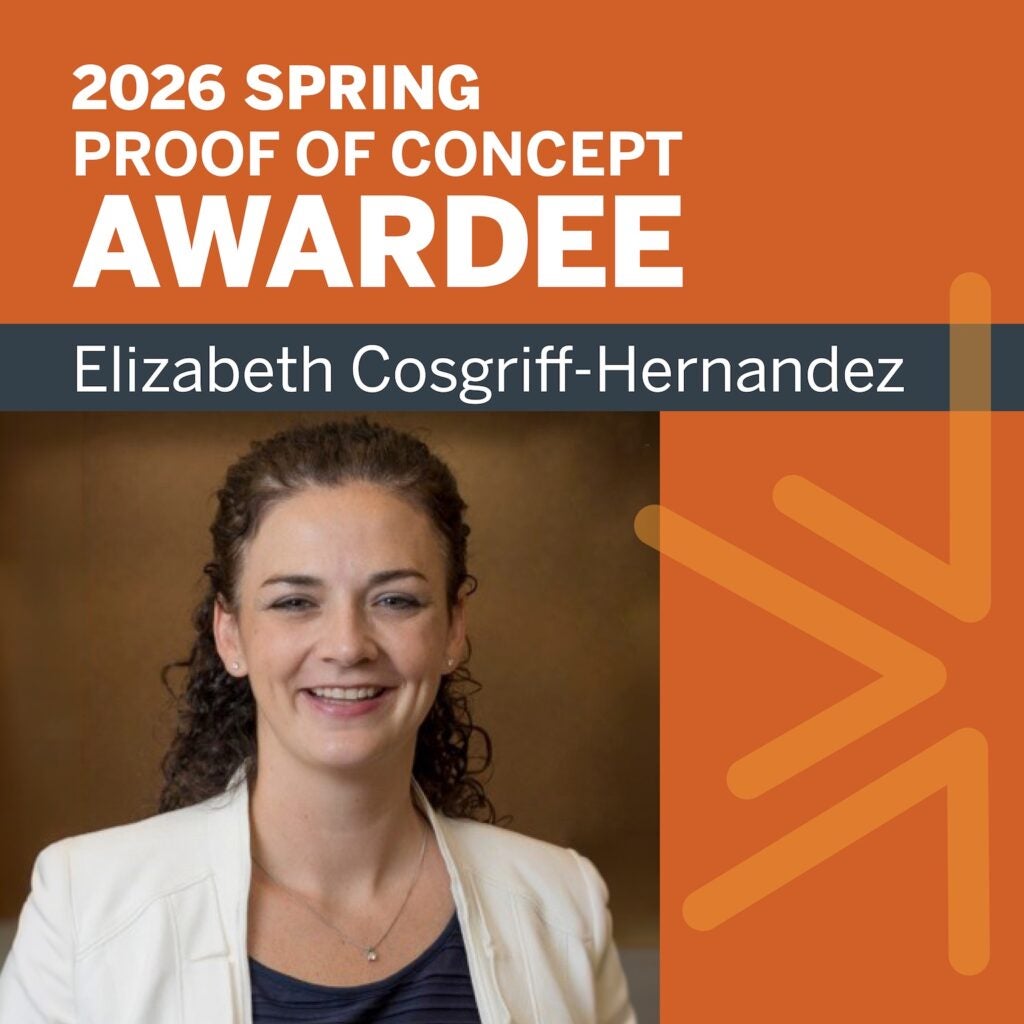
Congratulations to Dr. Elizabeth Cosgriff Hernandez and her collaborators on receiving two awards recognizing innovative work in cardiac rhythm therapy and lung surgery.
Dr. Cosgriff Hernandez received a Discovery to Impact Proof of Concept Award for her project, Transforming Cardiac Rhythm Therapy using Hydrogel mediated Ablation. She and her team are advancing a hydrogel mediated radiofrequency ablation technology designed to improve cardiac rhythm therapy by enhancing energy transfer and thermal control for more uniform lesions and fewer complications.
Dr. Cosgriff Hernandez and her collaborators from MD Anderson, Nicolas Zhou, Paula Aguilera Rodriguez, Andrew Ferrer, and Tim Marin, also received a Discovery to Impact Proof of Concept Award and a Cockrell Innovation Grant for their project, Next Generation BioPatch to Seal Air Leaks After Lung Resection. The team is developing a next generation lung BioPatch designed to rapidly seal post resection air leaks using a pressure resistant, tissue integrating design.
READ MORE
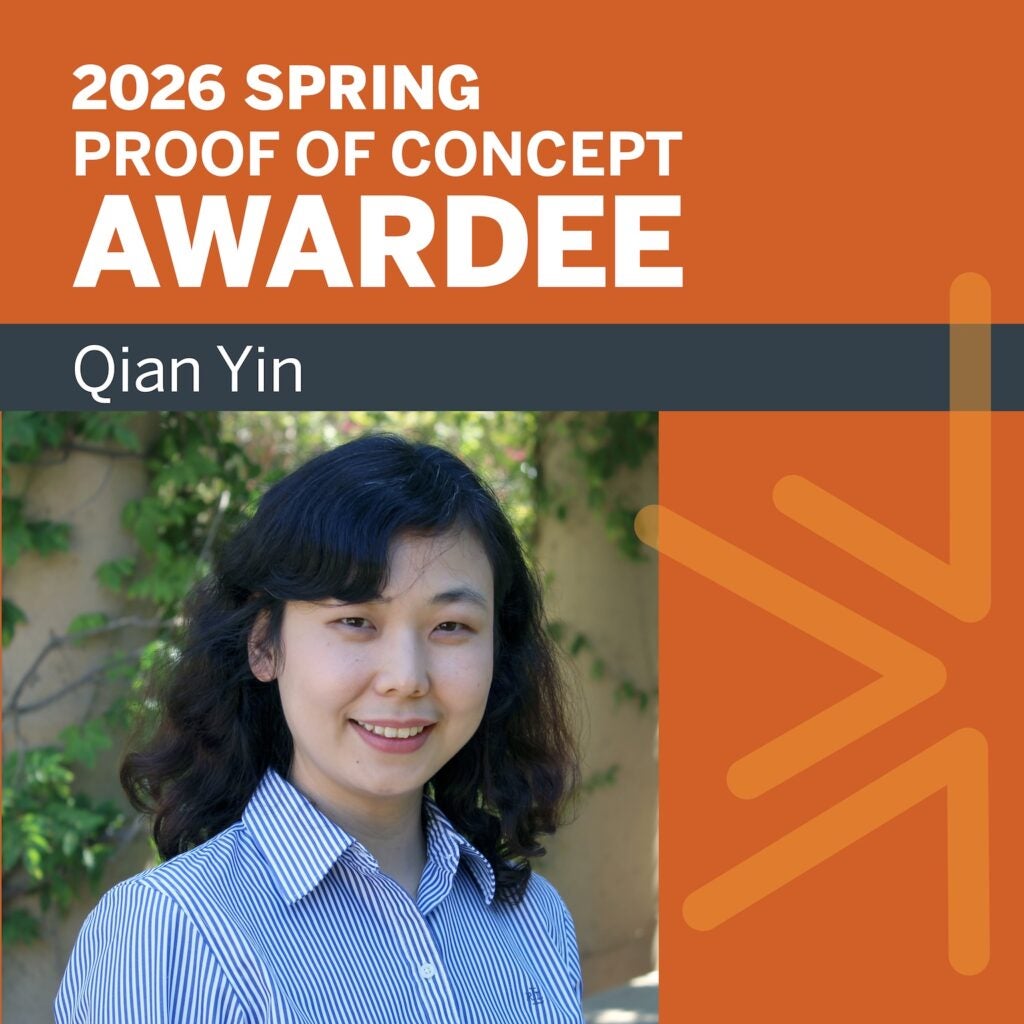
Congratulations to Dr. Qian Yin and collaborator Dr. Zhengrong Cui on receiving both a Discovery to Impact Proof of Concept Award and a Cockrell Innovation Grant for their project, A Novel Adjuvant for Pan-filovirus Vaccine.
Dr. Yin, from the Cockrell School of Engineering, The University of Texas at Austin, is advancing a novel solid-form nanoparticle adjuvant toward a stockpile-ready, pan-filovirus vaccine with broad, durable protection against Ebola, Sudan, and Marburg viruses.
PAST Award Recipients
-
Aaron Baker A Polysaccharide-Based Therapy for Nonalcoholic Fatty Liver Disease
-
Aaron Baker Drug Eluting Chest Tube for Pain Reduction Following Surgery
-
Aaron Baker Stem Cell Conditioning for Enhanced Vascular Regeneration
-
Adela Ben-Yakar Precision Laser Surgery Tools for Spine Surgery
-
Alan Groves Trinity Tube Feeding Tube
-
Alex Demkov Manufacturing Electro-optic Wafers for Silicon Photonics
-
Alex Hanson Differential Power Processing for Efficient Data Centers
-
Alex Hanson Novel AC/DC Converter Enabling Differential Power Processing in Datacenters
-
Alex Huang Medium Voltage Solid State Transformer
-
Alex Huang Ultra Compact AND Efficient Power Supply Unit (PSU) for AI Data Centers
-
Andreas Matouschek Degradons as a Novel Treatment for Cancers, Autoimmune and Neurological Diseases
-
Andrew Dunn New Method for Quantitative Blood Flow Imaging During Surgery
Discovery to Impact partners with researchers, inventors, investors, and entrepreneurs at every step of their journey in relentless pursuit of changing the world.